
Identify Who Owns Allegany Property
An address only starts the trail. Ownership answers in Allegany County come from records, not guesswork. The assessment roll lists an owner name for each parcel. A newly recorded deed can be more current than the roll. So the latest grantee matters. Name your source, and keep the roll owner separate from the deed grantee.
- Search the street address in SDAT Real Property Data Search and select Allegany County.
- Copy the exact Owner Name, district/account, premises address, and deed reference.
- Use the book/page in MDLandRec and read the newest conveyance's grantee and recording date.
- If an LLC or corporation is named, check its state filing trail without assuming that the filing reveals every beneficial owner.
Address → SDAT parcel → Owner Name → deed reference → latest recorded grantee
This route names the public owner of record. It cannot show who occupies the premises or replace a professional title opinion.
Sources Behind Allegany Ownership
No single database settles every ownership question. Maryland keeps assessments in SDAT, while land deeds stay with the Allegany County Circuit Court Clerk. County tax and GIS systems work well as cross-checks.
| Official source | Ownership clue | Limit |
|---|---|---|
| SDAT parcel card | Roll Owner Name, mailing address, premises address, deed reference | May trail a new recording |
| MDLandRec | Latest deed's grantee, capacity, date, and legal description | Requires reading the instrument |
| County tax search | Name, address, parcel, bill, and account lookup | A bill listing is not a title opinion |
| County GIS | Parcel location and cross-reference keys | Map lines are not surveyed title lines |
The deed names who received the recorded interest. The roll shows whom SDAT lists today for assessment notices. An occupant, manager, or permit applicant may match neither.
Copy Allegany's Exact Owner Name
SDAT permits no owner-name search to start. Begin with an address, account, or map reference instead. Once a parcel card opens, copy the exact Owner Name
under Owner Information. Keep strings like ET AL and any legal-capacity words intact, and note the mailing address, premises address, district and account, legal description, and deed reference. The sample Allegany parcel card on the SDAT details page shows these fields together.
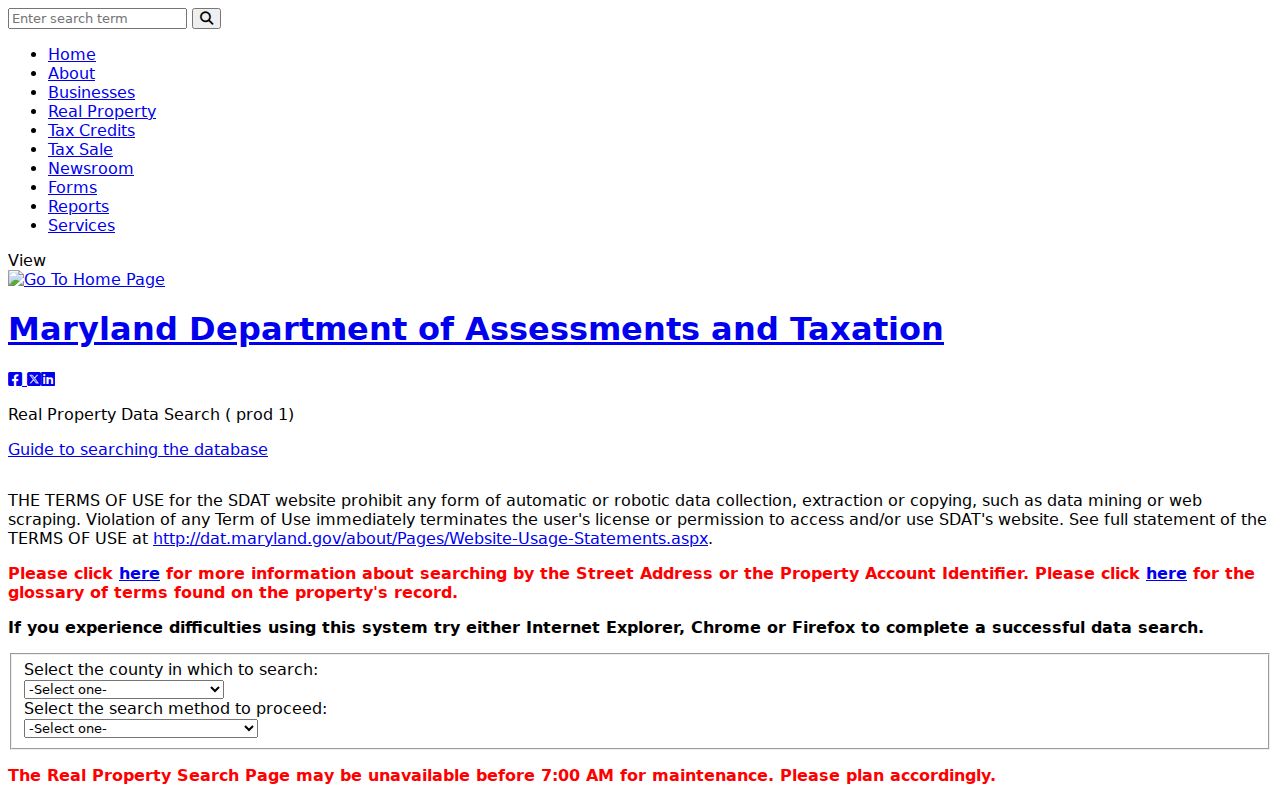
A deed reference and parcel key anchor a search better than a copied name alone. The sample card simply shows one parcel's fields.
- Owner of record
- The person or entity named in an official roll or recorded instrument.
- Grantee
- The party receiving the interest stated in a deed.
- Vesting
- The words describing how title is held.
- Situs
- The property location, distinct from the mailing address.
Start an Allegany Owner-Name Search
Start with only a name? The county tax portal bridges that name to a parcel. Its Tax & Utility Office instructions allow a Name search. Enter the name last name first, with no comma. Stick to one search method at a time. It also accepts property ID, address, or bill number. MDLandRec adds grantor and grantee searching, with exact, partial, fuzzy, and Soundex matching for people and corporations alike. A grantor may have already conveyed the interest away. So check the newest deed and each party's role. For deeper search-field mechanics, see the Allegany property search.
Owner-search shortcut. SDAT displays an owner but will not start from the name; use the county tax search or deed index first.
Confirm Allegany's Recorded Grantee
SDAT prints the deed reference in book/page form. Enter that citation in MDLandRec. Open the deed image and record the grantor, grantee, recording date, deed type, capacity language, legal description, and any prior-deed reference. Home access requires a free account. The courthouse Search Room may offer terminal access, and the Clerk's Land Records Department at 30 Washington Street in Cumberland answers recording questions at 301-777-5924.
A quitclaim deed conveys whatever interest the grantor holds, with no title warranty. Trustee, executor, life-estate, corrective, and deed-in-lieu language each change what the grantee line means. The Clerk records documents but runs no title searches and gives no legal advice.
SDAT says its data updates daily. No source promises a fixed closing-to-roll gap. For a recent sale, the newer recorded deed can beat the roll display, so save both dates.
Trace an Allegany Entity Owner
An entity owner deserves a closer look. Start with Maryland Business Express. Its public search accepts Business Name, Department ID, or EIN, and filing history is generally available for most documents filed after August 2001. Match the exact spelling from the deed or SDAT card. The state search page shows those entry fields.
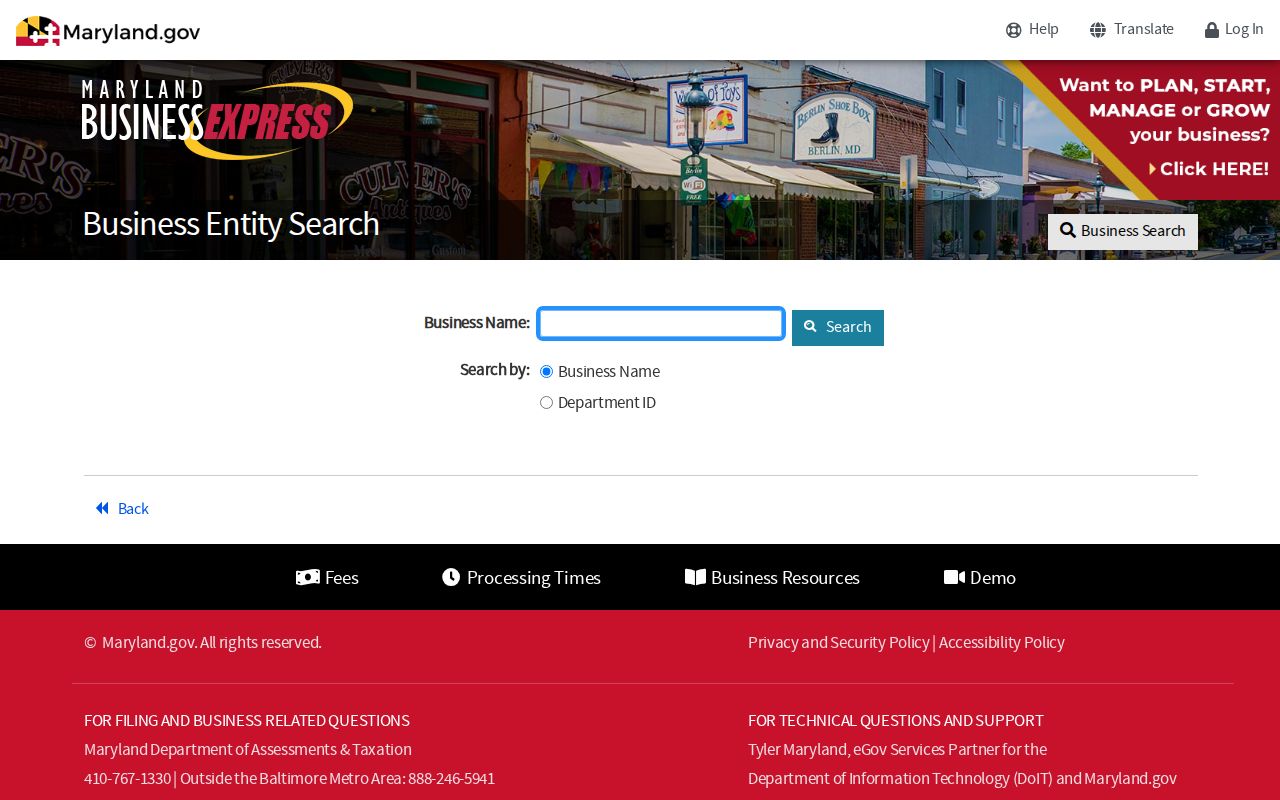
An entity record proves a Maryland filing trail, a resident agent, a status, and available filings. It does not reveal beneficial ownership of the land. The recorded deed ties the entity to the parcel.
Read Allegany Owner Capacity
Owner strings get messy. A roll line may name a city, an estate, a trustee, or several parties at once. Copy the full line. Probate records can explain an executor or administrator, but the deed or distribution instrument must still connect the estate to the parcel. A trustee's name reveals no trust terms. ET AL means other named parties exist, so open and review the instrument image.
The mailing address is just a contact field. It may belong to an owner, agent, fiduciary, or post-office box, and it is never proof that anyone lives on the site. A principal-residence flag or homestead credit is a tax clue, not occupancy evidence.
City ownership needs context too. A municipal name hints at a public parcel. Still, the deed and mapped parcel control the finding. Cumberland, Frostburg, and Westernport mailing labels can extend beyond city jurisdiction, so check the GIS map before assigning a municipal owner or city permit trail to an address.
Resolve Allegany Owner Mismatches
The tax roll, deed records, tax account, and plat map may disagree about an Allegany County owner of record. Start with the parcel number whenever they do. Names mislead. A split or merger can leave a deed tied to an older account. A fresh conveyance may show up in MDLandRec before SDAT catches up. A shortened legal description can bury a link. It may hide the tie between a street lot and its parent tract.
Write down when you checked each source. Then state the exact conflict plainly. The roll names one owner. A later deed names a different grantee. Or the parcel account itself changed. Naming the precise mismatch beats guessing at a name. For a purchase, estate, boundary fight, or broken chain, a Maryland title professional should read the instruments directly.
An online dead end still has official paths. Call Land Records with a book/page reference or recording question. Or visit the Clerk at 30 Washington Street during its published weekday hours. Older citations may live only in Maryland State Archives indexes, paper books, or microfilm. Allegany County GIS and SDAT can pin down an account. Neither office runs a title search. Save the failed query, spelling variants, and prior references. Your next property search starts ahead of the last one.
Limits on Allegany Owner Findings
A tax-roll owner is not always the person in possession. A permit applicant is not always the fee-simple owner. A tax-sale certificate, likewise, proves no completed transfer. Each source in Allegany County property records supports only its own narrow fact. A title dispute may appear. So may an unrecorded interest, life estate, trust question, or conflicting chain. The file then needs professional review.
Maryland Safe at Home gives eligible survivors a substitute address and mail forwarding. Do not try to break that shield or tie a participant to a real residence. Public records do not license surveillance, threats, repeated unwanted contact, fraud, or harassment.
Lawful use. Use Allegany owner records for legitimate property research, purchase checks, estate work, or deed-fraud review. Never use them to stalk, harass, or harm anyone.
A suspicious deed deserves a careful comparison. Check the official MDLandRec image against the SDAT account. Then contact the Clerk, a title insurer or lender, law enforcement, or the Maryland Attorney General as the facts warrant. Allegany County offers no official fraud-alert signup, so assume no such service exists.