
Inside Allegany Property Tax Records
One parcel, two ledgers. That is the heart of Allegany County property tax records. The Maryland State Department of Assessments and Taxation, known as SDAT, builds the assessment roll. Its parcel card lists the account and owner name. It gives premises, mailing addresses, and the legal description. It also shows the assessment year, land value, improvement value, total value, phase-in figures, and recent transfers. The Allegany County Tax & Utility Office handles the billing side. Charges, balances, payments, delinquency, and tax-sale administration all live there. Each system answers a different question. Keep the SDAT card and the county bill together whenever you review a parcel.
| Field | What It Shows | Where |
|---|---|---|
| Land, improvements, total | Separate parts of the parcel's assessment | SDAT parcel card |
| Base and phase-in values | Values used as a new assessment moves into effect | SDAT parcel card |
| Principal-residence status | A tax-program clue, not proof of occupancy | SDAT parcel card |
| Bill and payment status | Current charge, balance, payment, or delinquency | County Tax & Utility Office |
| County and municipal components | Applicable taxing jurisdictions on the bill | County tax record |
Maryland, through SDAT, assesses real property. Allegany County then collects the taxes that assessment produces. Neither figure equals the other, and neither is automatically the last sale price. A transfer row may show a price and deed reference, but read the deed itself when the consideration is blank, nominal, or tied to a non-arm's-length transfer. For a closer look at the value terms themselves, the Allegany property value page breaks them down.
Five Keys for Allegany Tax Search
The county payment and tax-search instructions list five entry points. Pick one method at a time. That discipline matters, because an overly specific query can return no match even when the account exists.
| Search key | Entry rule | Best use |
|---|---|---|
| Property/Parcel ID | Eight-digit account number from the bill | Exact parcel match |
| Name | Last name then first name, no comma | Finding bills tied to a person |
| Address | Street name with or without number; omit suffix | Starting from a known site |
| Bill Number | Copy the bill's displayed identifier | Returning to one charge |
| Account Number | Preserve leading zeroes | Reconciling tax documents |
Names cause trouble in plenty of forms. An owner may appear as an entity, an estate, a trust, or an ET AL
string, and an address may carry a mailing-city label that proves nothing about municipal jurisdiction. When a bill search fails, pull the parcel identifier from SDAT instead of guessing at ownership.
Read Allegany Assessment Values
The SDAT Real Property Data Search opens with Allegany County and a choice of search method. It accepts address, account, map reference, or sales criteria. Owner name is not a starting option there. Each result card separates the premises address from the owner mailing address and sets value details beside parcel and transfer fields. A sample Allegany SDAT result card displays the sections that matter for property tax research: assessment year, land, improvement, total, principal residence, exemption, and transfer areas.
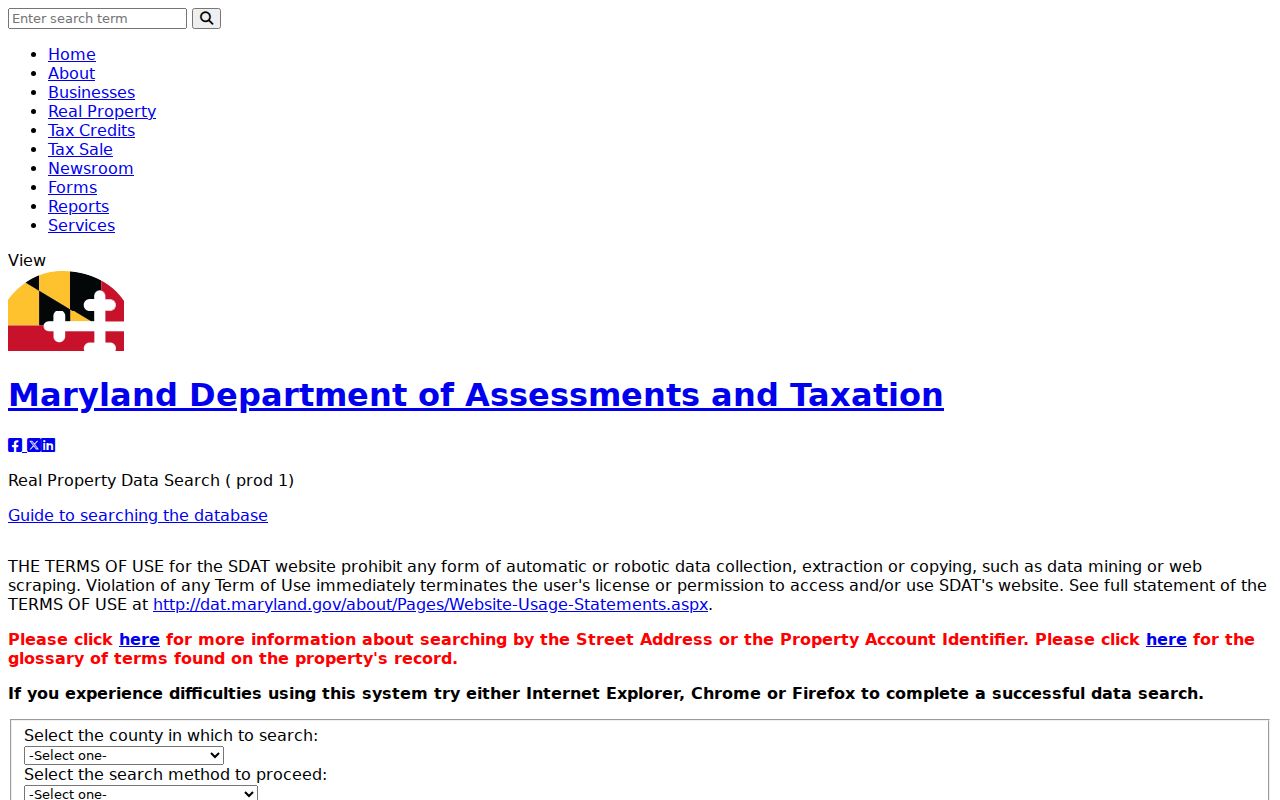
Save the assessment year and effective date with every figure. Values move. An undated screenshot cannot show which roll it came from. Maryland's model starts from full market value. It then applies phase-in and tax-credit rules where they fit. The Homestead Tax Credit can cap growth in a taxable assessment. That cap applies to an eligible principal residence. It is not a market price. Nor does the principal-residence field prove that a named owner lives on the parcel.
Look Up an Allegany Tax Bill
Treat a tax lookup as a short reconciliation. One click rarely finishes it. Start with the address you know. Keep the parcel or account identifier close. The bill can then be checked against the state assessment record. The bill is the authority on what was charged and paid. SDAT supplies the value and classification data behind that process.
- Open the county tax route and enter one key: property ID, name, address, bill number, or account number.
- Copy the account, property address, charge year, and displayed balance or payment status.
- Open the matching SDAT parcel card and compare district/account, premises address, and assessment year.
- Check the current county notice before relying on a fee, due date, delinquency status, or sale date.
- Assessed value
- The official value carried on the assessment record for tax administration.
- Tax rate
- The rate applied by a taxing jurisdiction, subject to the bill's rules and credits.
- Homestead Tax Credit
- A program that can limit taxable-assessment growth for an eligible principal residence.
- Tax lien
- A public claim arising from unpaid property tax; it is not the same as completed ownership transfer.
The county's official instructions are illustrated in the captured tax-search screen.
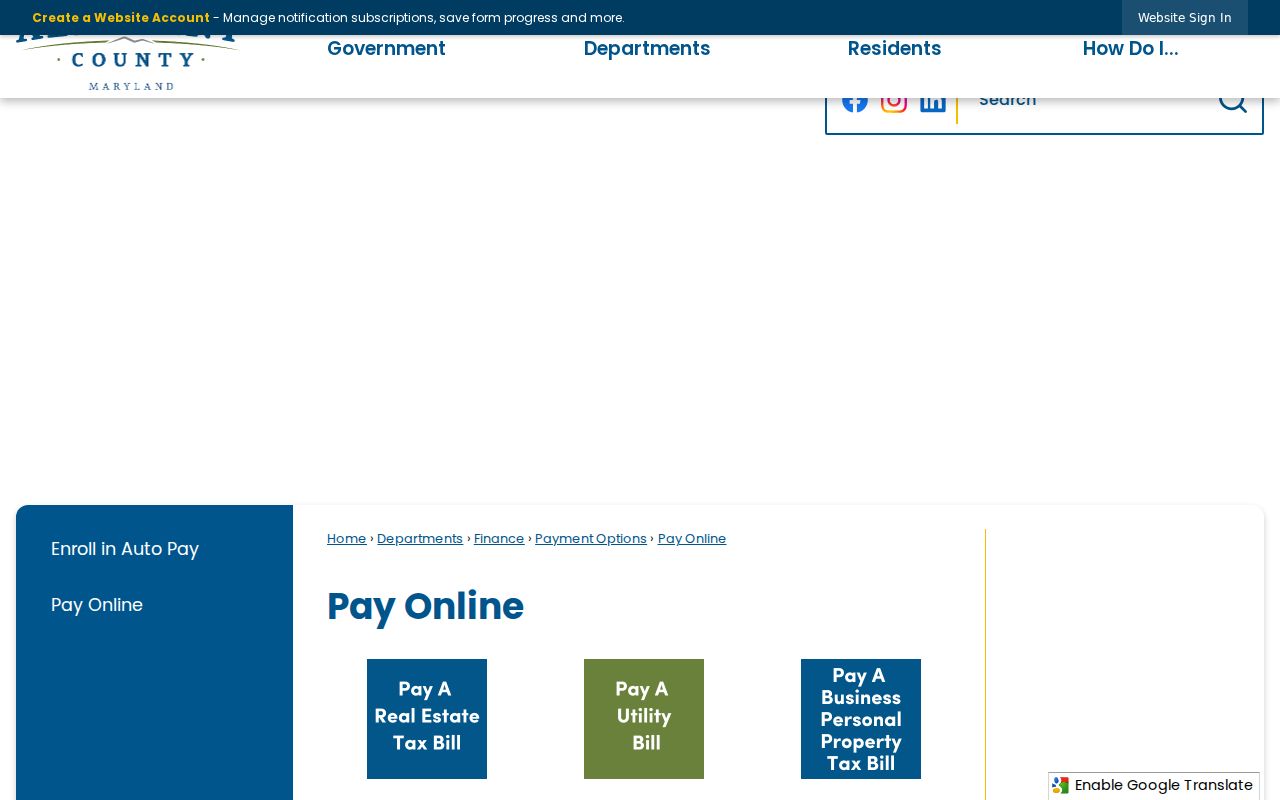
The five search keys let you recover from a spelling mismatch without switching systems. Enter one field at a time.
Allegany Tax District Context
An Allegany County mailing address can sit inside Cumberland, Frostburg, Westernport, another municipality, or unincorporated county land. It can also sit in another municipality. ZIP labels such as Cumberland 21501 or 21502, Frostburg 21532, and Westernport 21562 are postal geography only. They are postal geography. They establish no city boundary and no city tax component. Confirm jurisdiction in the parcel and GIS records before reading the bill. Rate notices age fast, too. For fiscal year 2025, the county, Frostburg, and Westernport all posted proposed rate changes. A May 2025 card-processing change set the fee at 3.95 percent or a $2.50 minimum. The county also listed eCheck as fee-free, with cash and check as alternatives. The live bill and the current notice always control. Never carry an old rate or convenience fee into a fresh estimate. Municipal, county, and special-district lines shape the amount due, not the deed ownership underneath. When a tax line looks wrong, compare the mapped jurisdiction and bill period. Do this before assuming an error.
Allegany Tax Sale Status
Delinquent property tax can push a parcel into a separate sale process. The county's Tax Lien Sale Information page posts time-sensitive notices, terms, and lists. Its 2026 materials describe an online auction scheduled for May 28. Registration runs from May 6 through May 20. An over-the-counter list is included too. Treat those dates as a moving record, not fixed annual events. The county page itself links the latest sale materials each cycle.
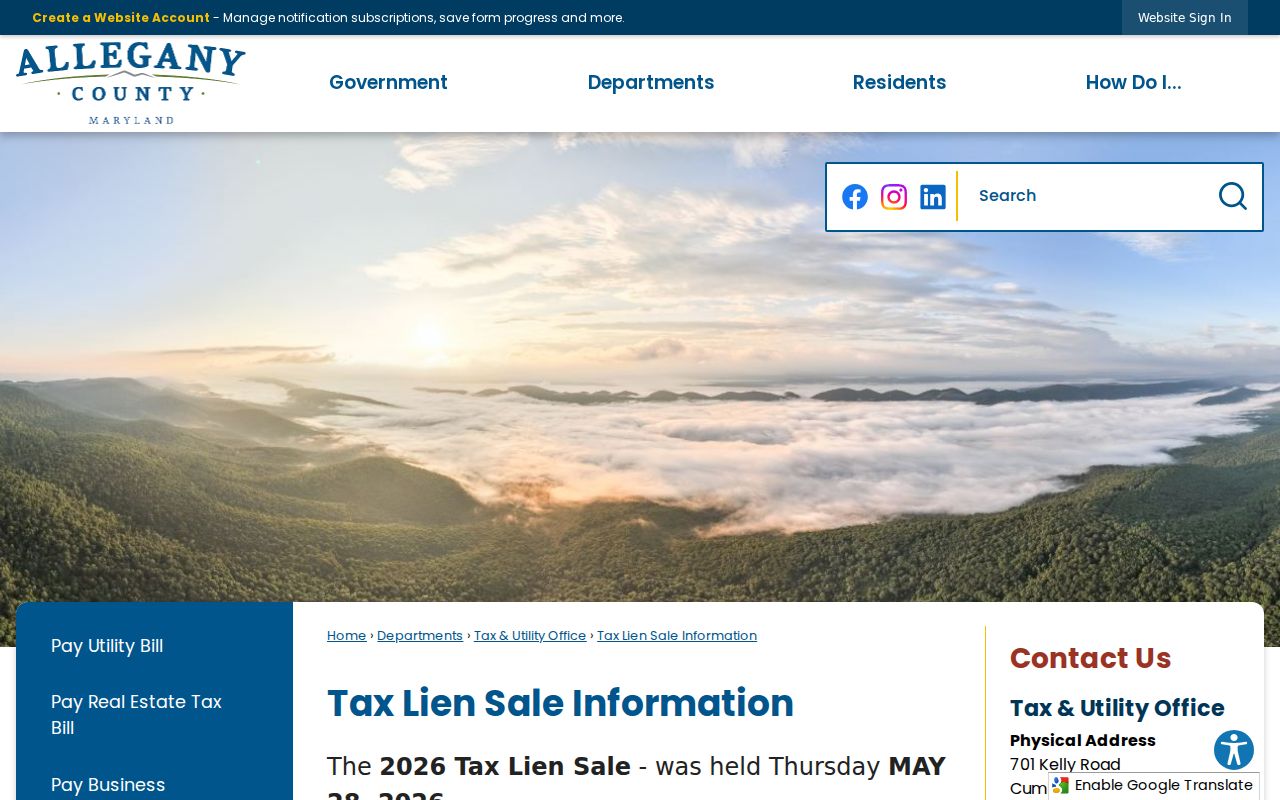
A listing or certificate alone does not prove fee-simple title changed hands. Redemption, court action, later payment, and record updates can all shift the status. Check the live notice, the tax account, any court file, and the recorded land records.
Tax-sale limit. Treat a posted list as dated status information, not as proof that the listed owner lost title.
Allegany Tax Office Access
The web is not the only door. For bill, payment, delinquency, and tax sale questions, call the Allegany County Tax & Utility Office at 301-777-5965. Valuation is a different conversation. Assessment matters go to the SDAT Allegany office on the 3rd Floor at 112 Baltimore Street in Cumberland, by phone at 301-777-2108, or by email at sdat.alle@maryland.gov. Splitting the question this way keeps a billing dispute away from the assessor and a value dispute away from the collector.
Before reporting an account discrepancy, gather the right identifiers. Have the bill number, property ID, assessment account, tax year, payment receipt, and inspection date on hand. A county Public Information Act request is not the opening move for a routine bill or assessment question. The faster route is simply asking the office that keeps the record.
Appeal an Allegany Assessment
An assessment appeal attacks SDAT's value. It does not change the tax rate or erase a payment the county has posted. Begin with the assessment notice and the parcel card. Check the legal description, land area, use, structures, and value components for factual errors. Strong evidence might be recent arm's-length sales, photographs, repair estimates, or an appraisal. Other good evidence is records proving the property description itself is wrong.
The SDAT online appeal form opens by asking for the County. It also requests the Notice Number and Control Number. The form itself states a 45-day filing window measured from the notice.
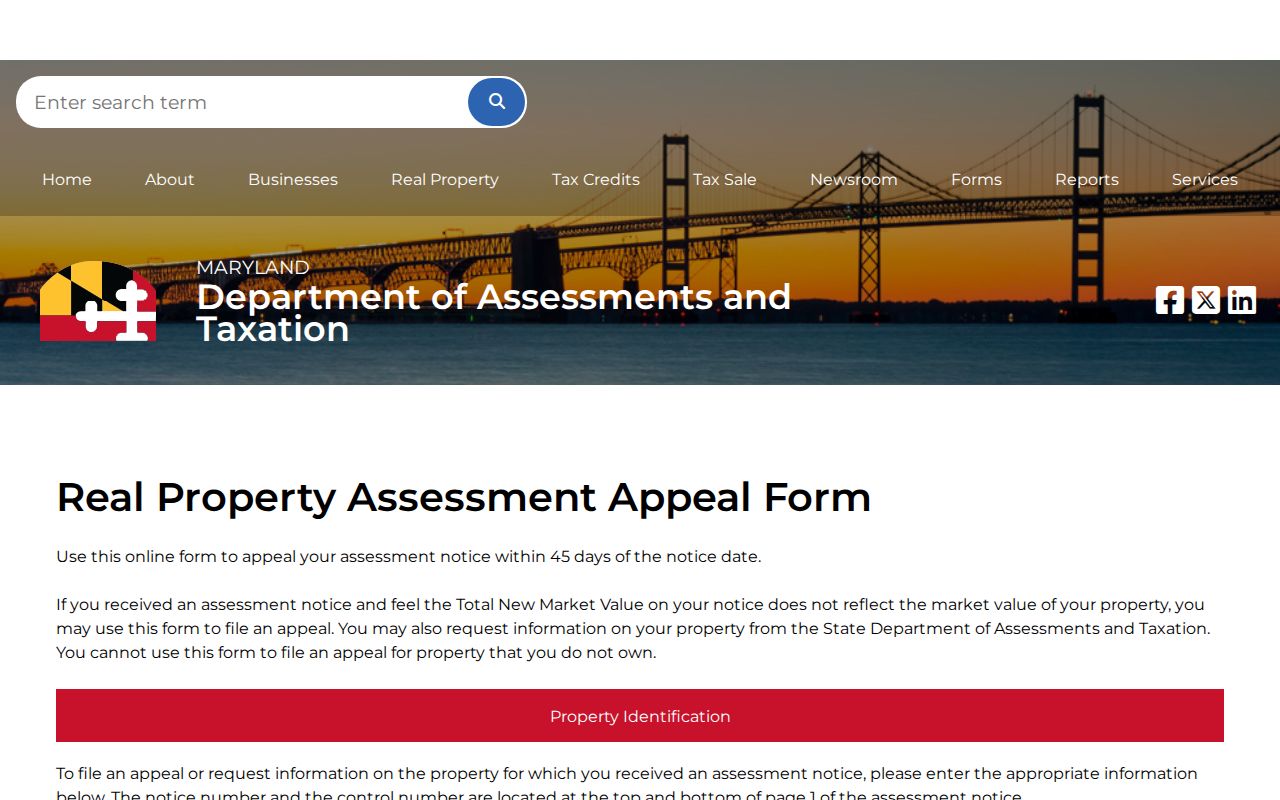
That window runs from the notice date. So the filing math starts there, not from when you first see the parcel card. A later stage may reach the Property Tax Assessment Appeals Board, but follow the current notice and SDAT instructions for the assessment cycle at hand.
Appeal window. The captured SDAT form states 45 days from the notice; confirm the deadline printed on the actual Allegany assessment notice and file within it.
Keep a file of what you submitted and when. Save the confirmation and the notice. Keep the control number and all parcel identifiers too. Hang on to every comparable you cited. That paper trail separates a timely value dispute from a billing question raised later.
Factual issues need pinpoint proof. Name the exact field and supply the source that corrects it. A wrong land area, structure entry, use code, or transfer detail calls for different evidence. An argument that comparable sales justify a lower value is a separate matter. Tax-rate objections belong elsewhere, since SDAT's assessment appeal does not set county or municipal rates. Once a decision arrives, compare it against the next parcel card and tax bill. Do not assume every connected system updated at once.